
PCOS Not Improving? The Treatment Sequence May Be Wrong

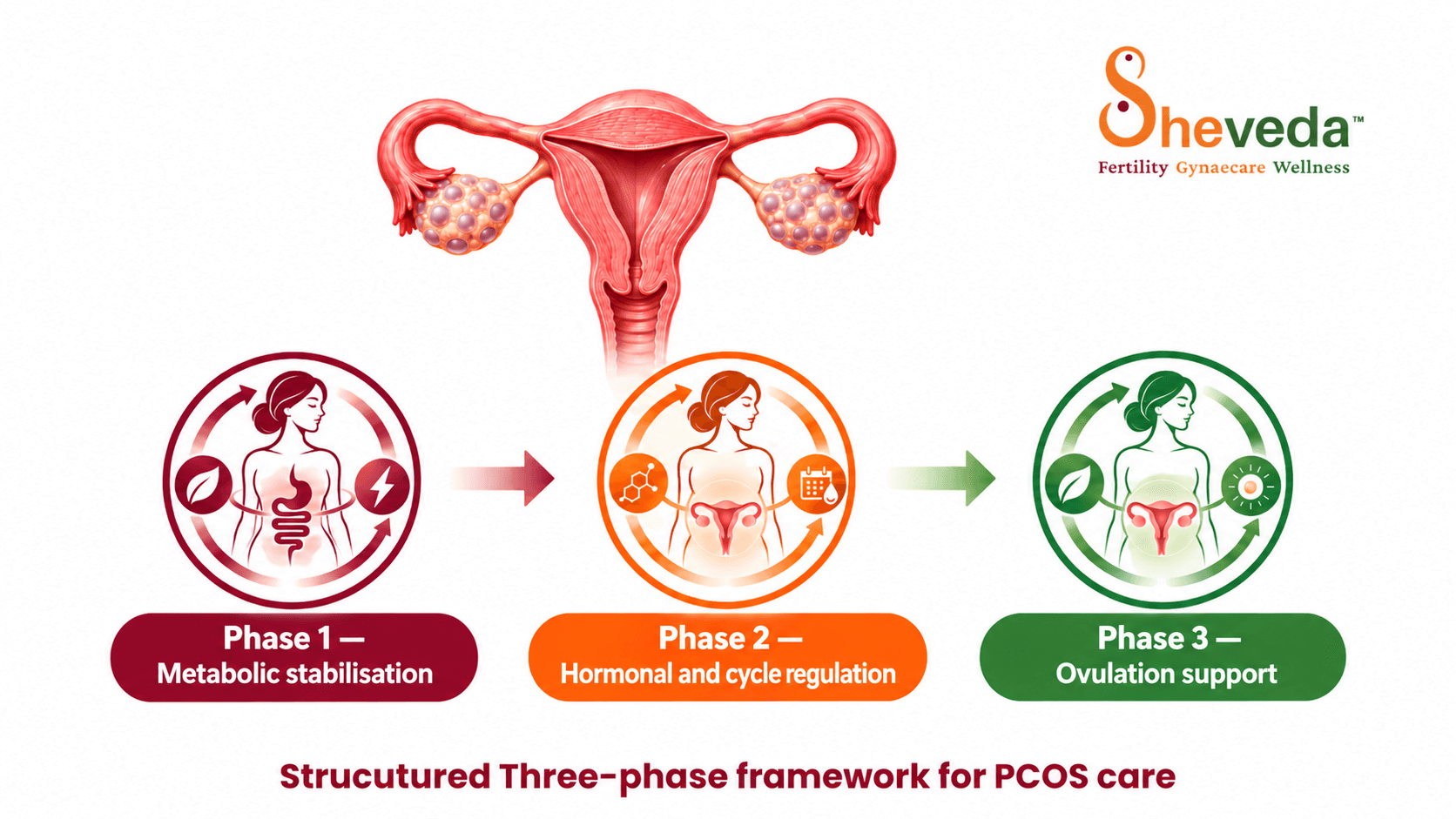
When PCOS is not improving despite treatment, sometimes the question is not simply what is being treated, but in what sequence.
PCOS is a multi-system condition. Hormonal signalling, insulin resistance, inflammation, gut health, sleep, cycle rhythm and ovulation can all be part of the picture — but they do not necessarily affect every woman in the same way.
That is why at Sheveda, we use a structured three-phase framework while personalising care according to each woman's dominant drivers.
Phase 1 — Metabolic stabilisation
For many women with PCOS, the first step is to understand and address the metabolic environment in which hormonal and ovarian function are operating.
Depending on the individual, this may include attention to:
- Insulin resistance and glucose regulation
- Inflammation
- Gut and digestive health
- Sleep and daily rhythm
- Diet, activity and other lifestyle factors
Rather than beginning with ovulation alone, this phase focuses on creating a more stable metabolic foundation for the reproductive system.
Phase 2 — Hormonal and cycle regulation
Once the metabolic picture is being addressed, the next focus is the menstrual cycle and hormonal signalling.
The aim is not simply to produce a period. We look at whether cycles are becoming more regular and whether the hormonal rhythm underlying the cycle is improving.
This distinction is important because having a bleed and having a healthy, ovulatory cycle are not necessarily the same thing.
Phase 3 — Ovulation support
For women trying to conceive, ovulation becomes a particularly important part of the plan.
After working on metabolic stability and cycle regulation, care can focus more specifically on supporting regular ovulation and the reproductive environment needed for conception.
The sequence matters because ovulation does not occur in isolation — it is influenced by the hormonal and metabolic environment around it.
Effective PCOS care is not about quick fixes. It is about identifying what is driving the condition and addressing it in the right sequence.
The same sequence does not mean the same treatment
A three-phase framework should not become another one-size-fits-all PCOS protocol.
One woman may have significant insulin resistance and irregular cycles. Another may be lean, have relatively regular periods, but still experience ovulatory or fertility concerns. Sleep, stress, digestion, inflammation and other hormonal factors may carry different importance from one person to another.
Every patient has a dominant driver.
The purpose of a structured assessment is to identify those drivers and decide where the emphasis of treatment needs to be within the broader framework.
When to seek guidance
If your cycles remain irregular, PCOS symptoms continue despite treatment, or you are trying to conceive without success, a more detailed assessment may help the factors that are continuing to drive the condition.
At Sheveda, the focus is not only on the PCOS label, but on understanding the metabolic, hormonal and reproductive picture of the individual woman.
Have questions about your PCOS care?
Speak with Dr. Rujuta Trivedi about your concerns and the next steps in your care.